Hello Friends!
Being a planner is a big part of who I am.
Most often, you see that part of me through celebrations—planning a menu, setting a table, preparing our home for guests, or thinking through all of the little details that help a special moment come together.
But planning isn’t only about preparing for the things we’re looking forward to.
Sometimes, it means thinking ahead for the things we hope never happen.
Over the years, we’ve gathered emergency supplies for our home to help us navigate a power outage, severe weather, or another unexpected situation. Some of those supplies live in our pantry, while others are organized together in a closet. And although I hope we never need most of them, knowing that we’ve thought ahead gives me peace of mind.
Preparedness doesn’t have to come from fear. For me, it’s simply another way of caring for our home and the people in it.
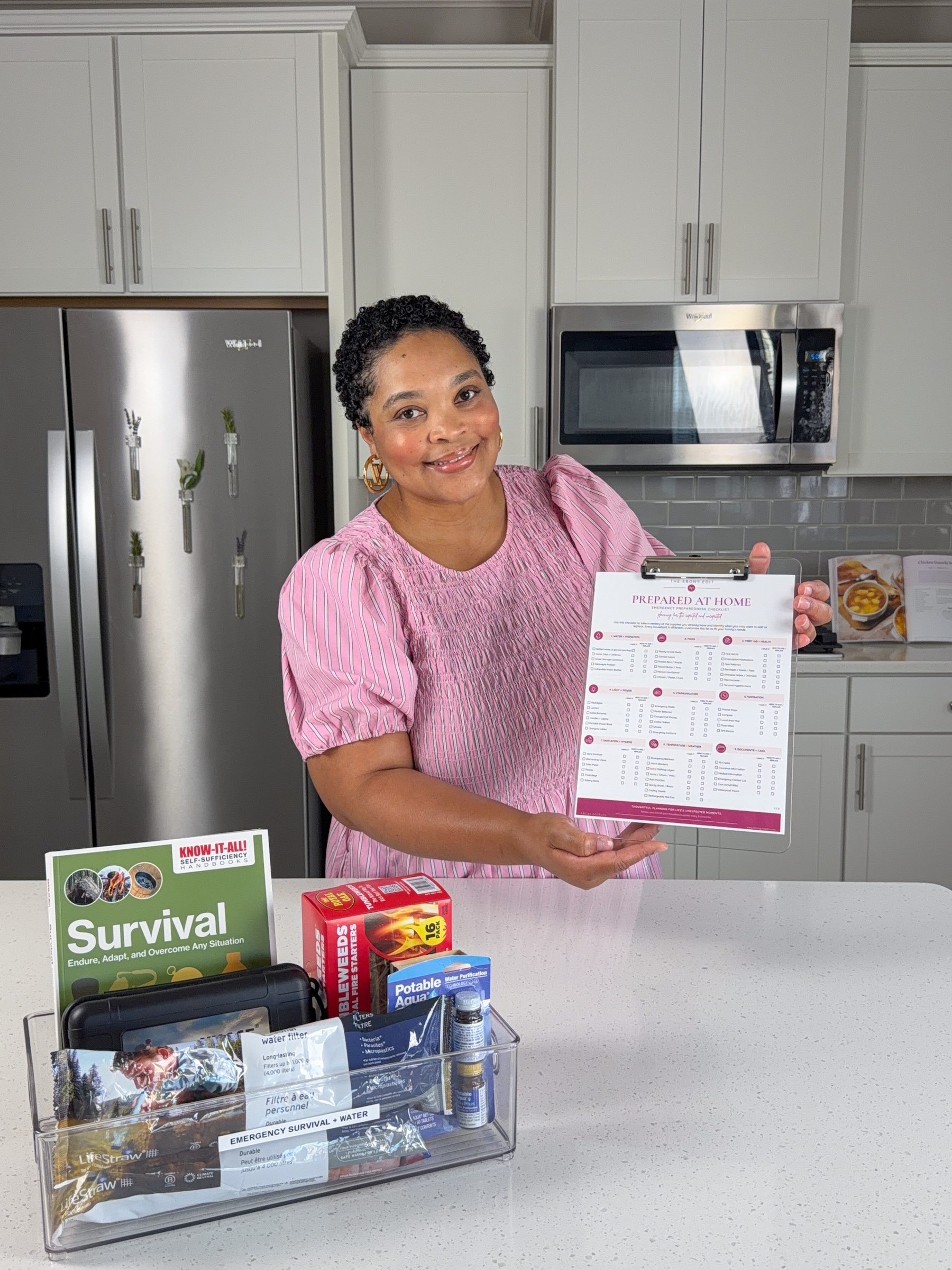
PREPARED, NOT FEARFUL
Unexpected things happen.
A storm can knock out the power. Roads can become difficult to navigate. Cell service or internet access can be interrupted. Water service can temporarily become unavailable. Even something as familiar as a prolonged power outage can remind us just how many parts of everyday life depend on electricity.
My approach is the same one I bring to so many other areas of life: think ahead, make a plan, prepare what we reasonably can—and then get back to living.
Federal preparedness guidance recommends keeping several days of water and nonperishable food on hand, along with essentials such as a radio, flashlights, extra batteries, first-aid supplies, a whistle, sanitation items, a manual can opener, and local maps. It also encourages families to consider the specific needs of their own household when building their supplies.
For additional guidance, you can visit Ready.gov.
PREPARATION THAT LIVES WITH US
One thing I didn’t want was an emergency food supply sitting untouched somewhere until everything expired.
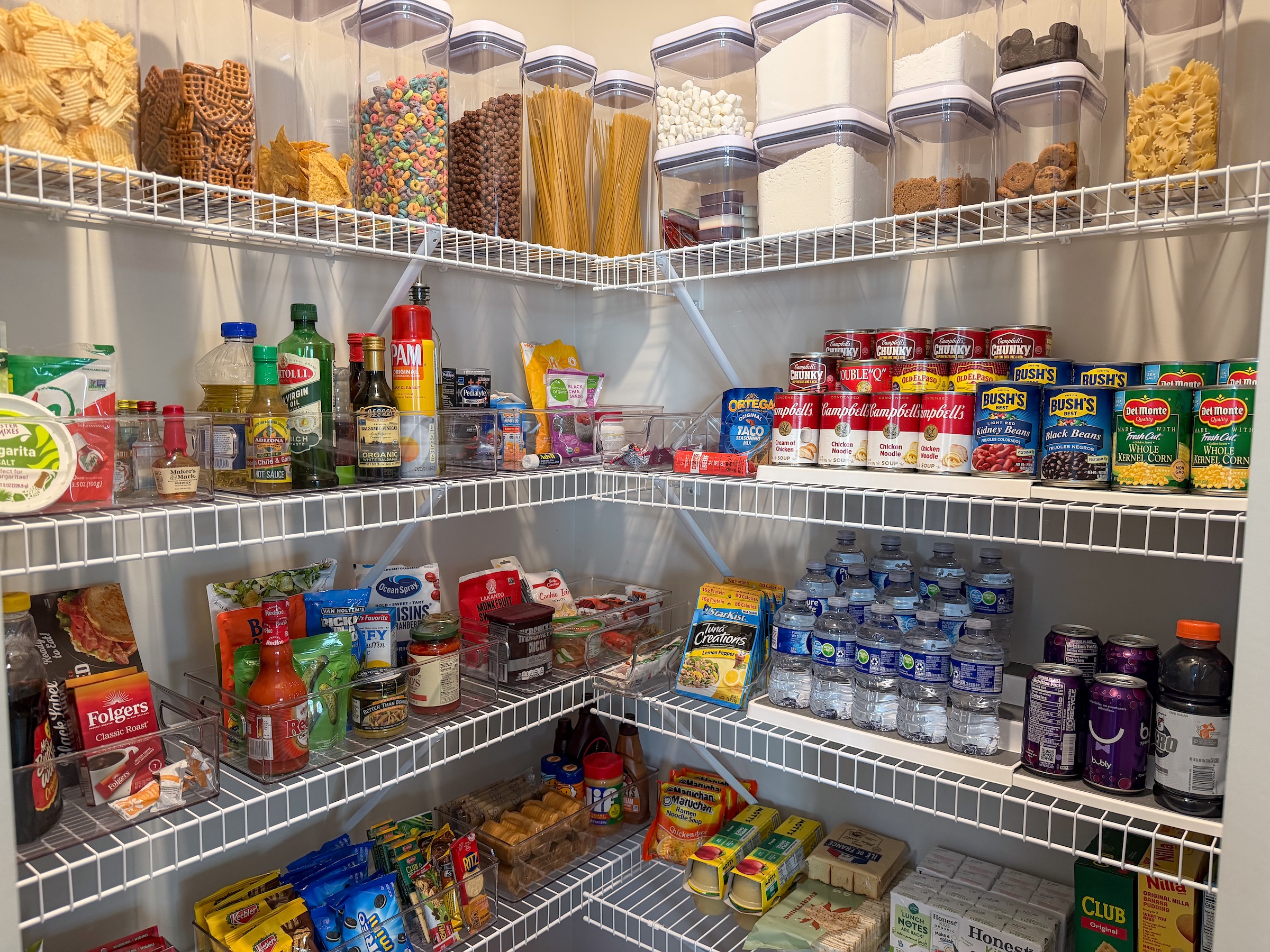
Instead, our pantry is part of our preparedness.
We keep bottled water, canned goods, shelf-stable foods, crackers, snacks, hydration products, and other everyday staples on hand. They’re foods we actually eat, which means we can use what we have, rotate older items forward, and replenish our supply as needed.
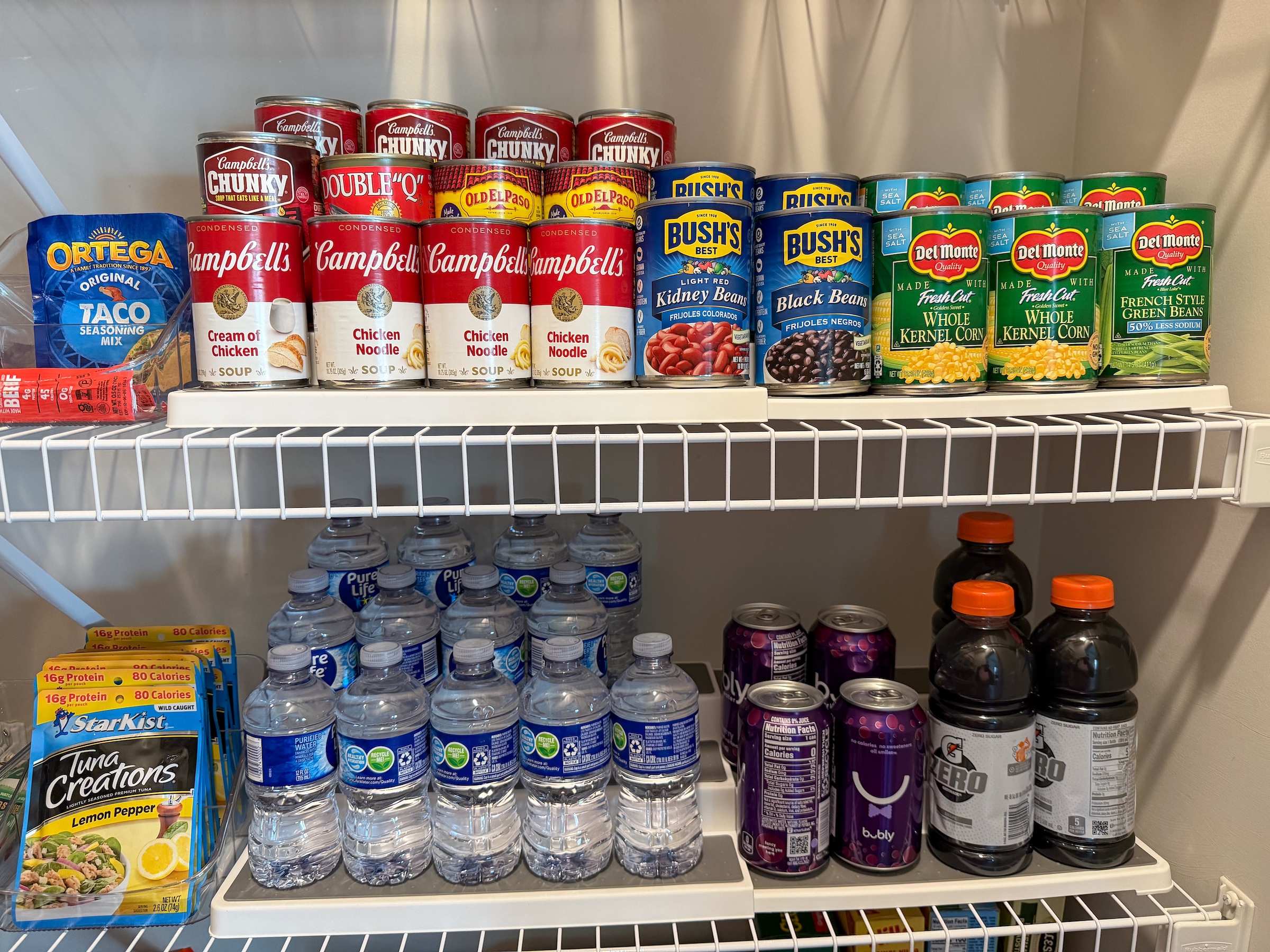
That approach makes much more sense for our family than buying food specifically for an emergency and letting it sit untouched.
The goal isn’t to have the most stocked pantry. It’s simply to have enough useful food and water on hand that an unexpected interruption doesn’t immediately become a bigger problem in our household.
BEYOND FOOD + WATER
Food and water are only part of our plan.
We’ve also created a dedicated area in our back closet for the supplies we may need if our normal routines are disrupted.
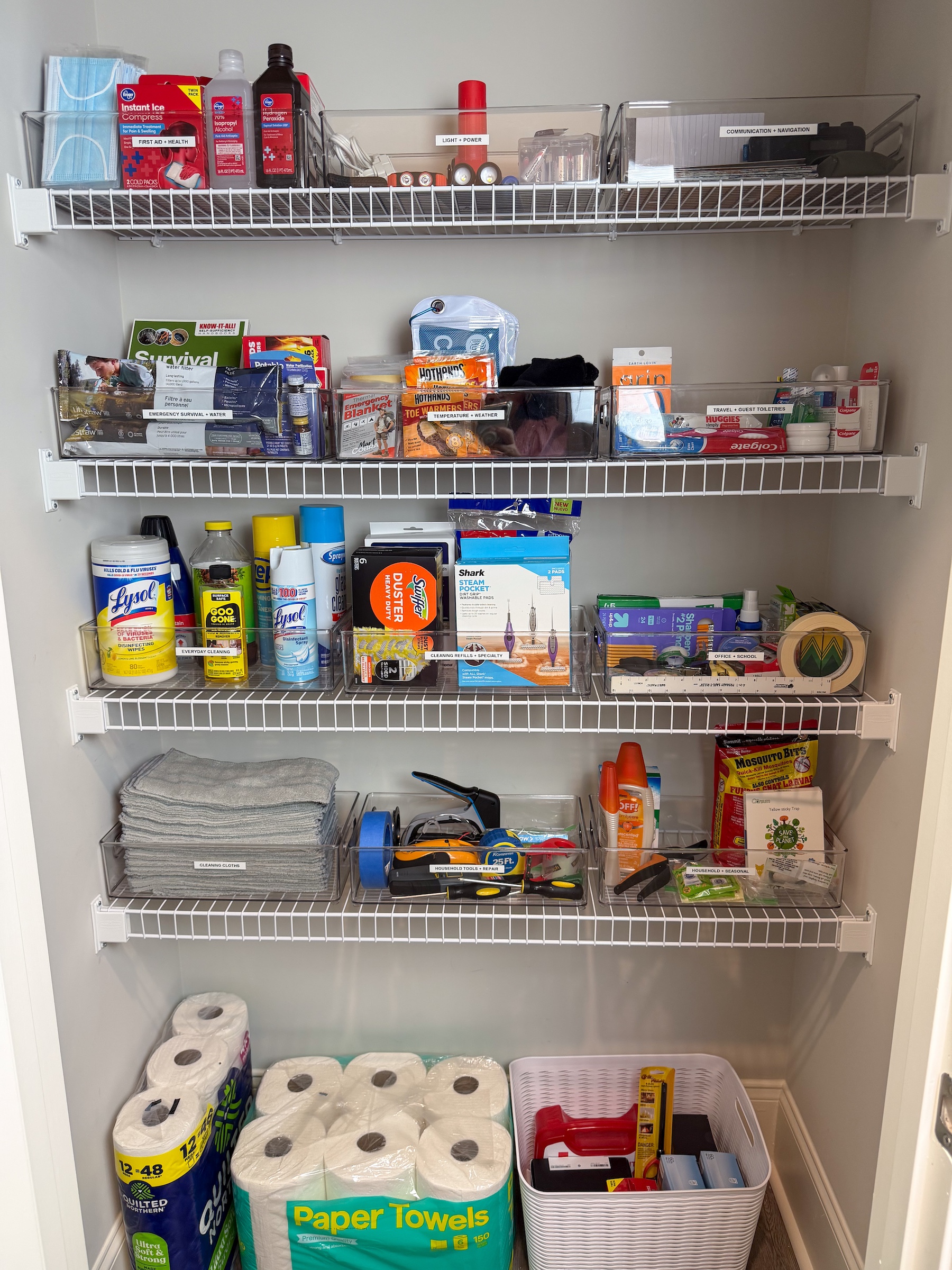
Our emergency-preparedness supplies are organized into five main categories, alongside other everyday household bins we use regularly:
FIRST AID + HEALTH
First-aid supplies and other basic health essentials.
LIGHT + POWER
Flashlights, batteries, portable power banks, charging supplies, and other items that can help us navigate a power outage.
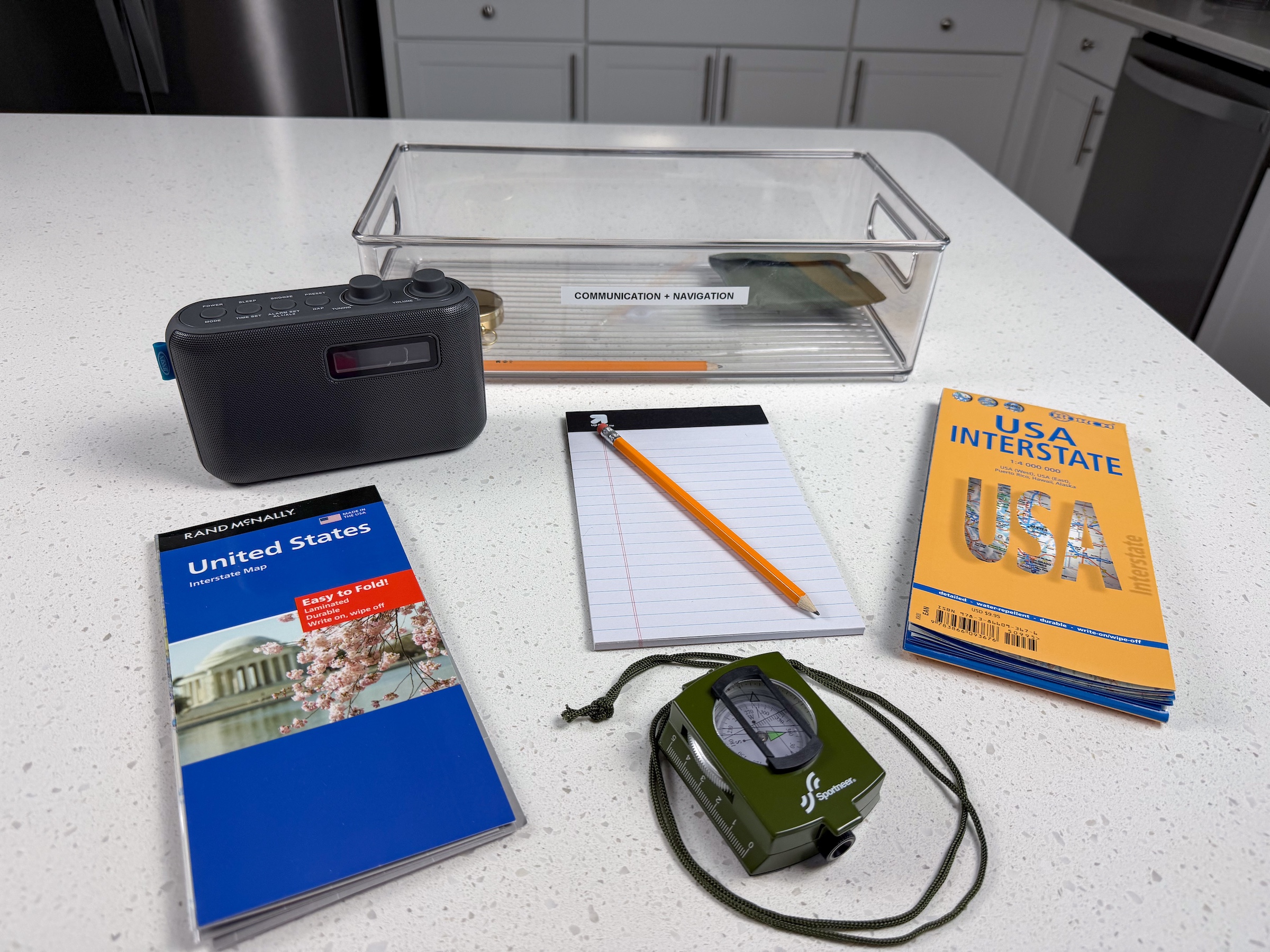
COMMUNICATION + NAVIGATION
Our emergency radio, compass, printed maps, emergency contacts, and other essentials that don’t rely on Wi-Fi or cellular service.
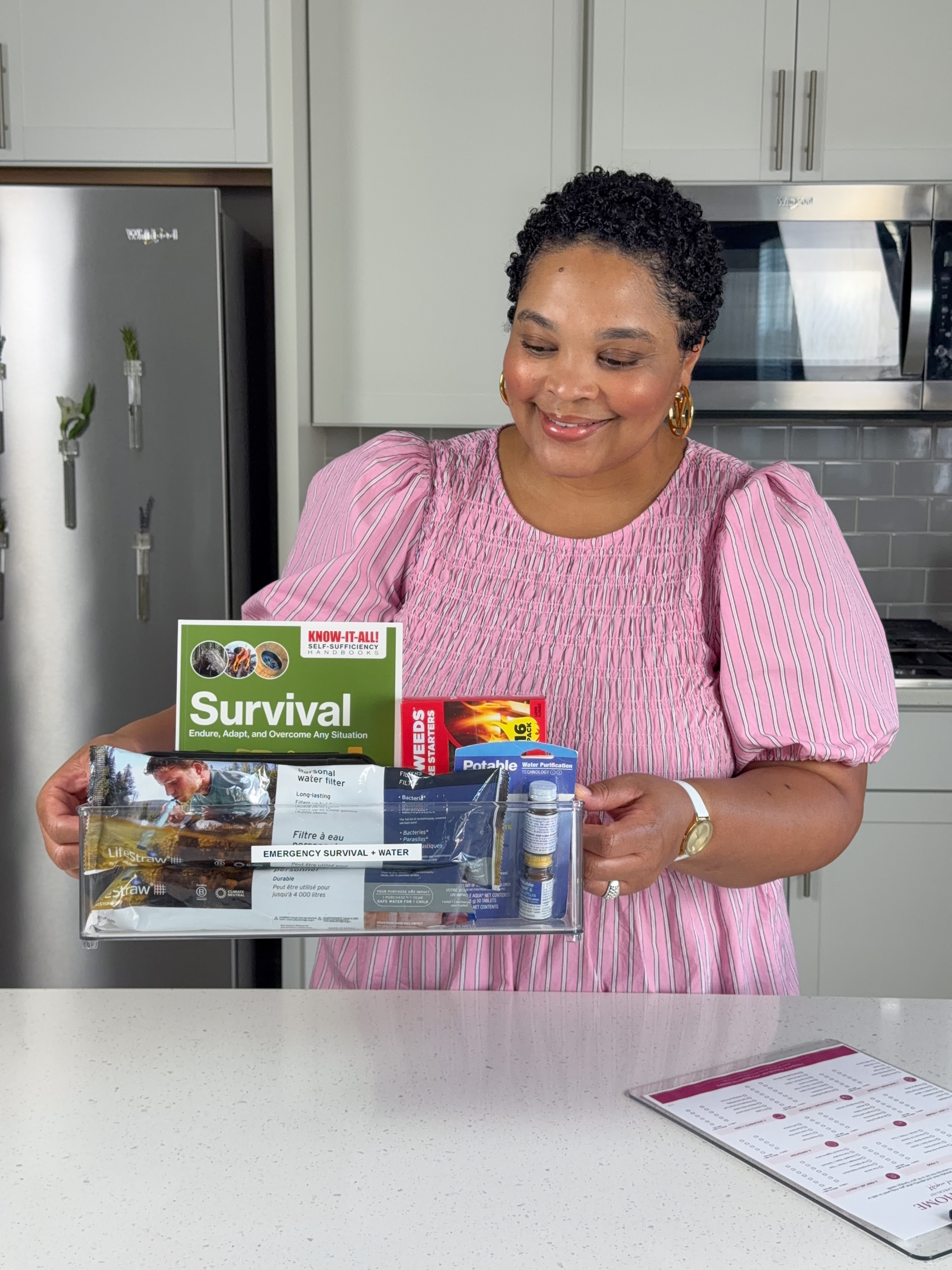
EMERGENCY SURVIVAL + WATER
Water filtration supplies, fire-starting essentials, and other basic survival items.
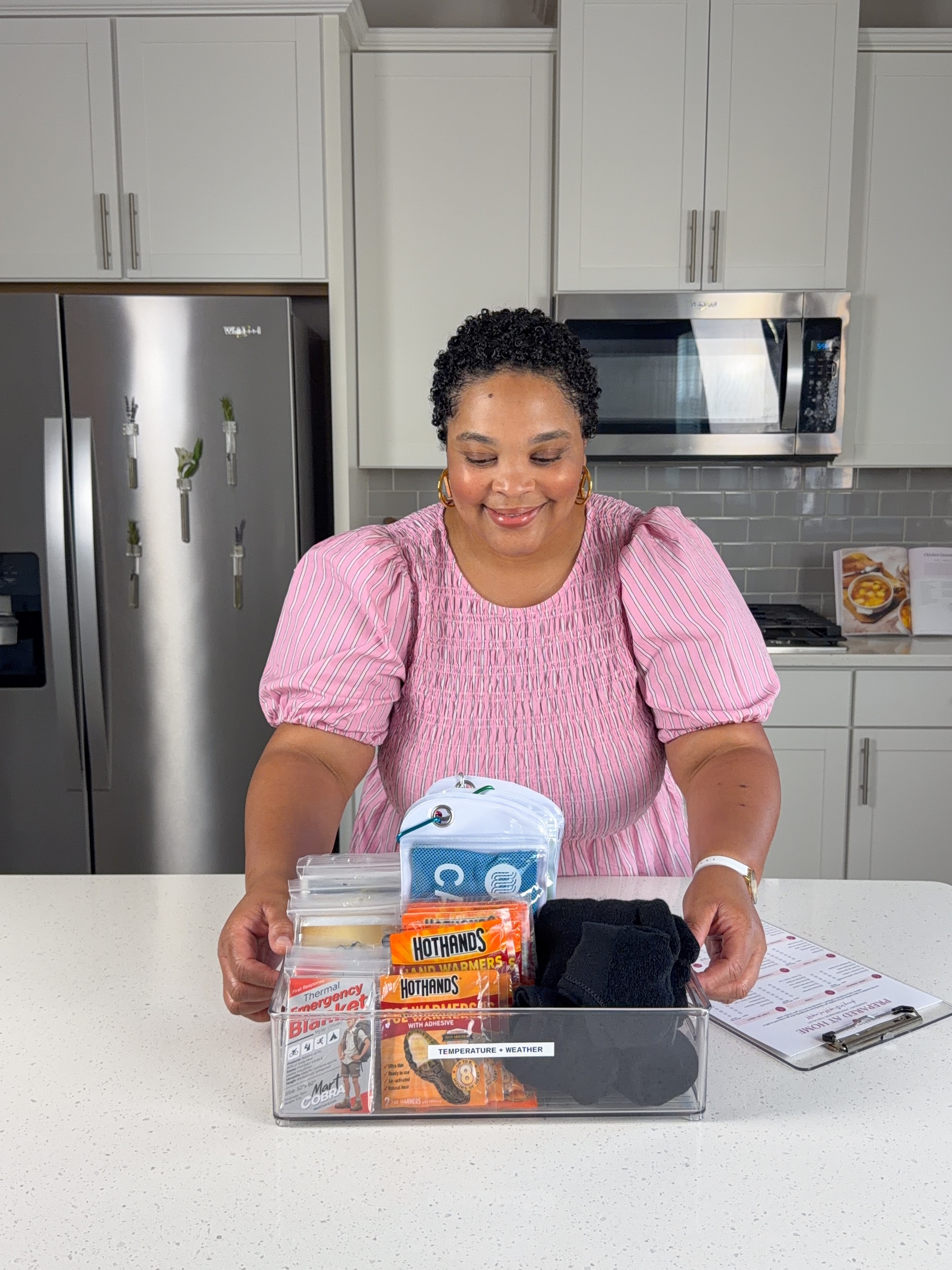
TEMPERATURE + WEATHER
Emergency blankets, hand warmers, gloves, ponchos, and other items that can help keep us comfortable if normal heating, cooling, or shelter is disrupted.
The closet also holds our everyday household back stock—things like cleaning supplies, guest toiletries, school and office items, basic tools, and seasonal necessities. Keeping everything together makes it easier to see what we have, replenish what we use, and find what we need when we need it.
Preparedness guidance also encourages thinking beyond a single home emergency kit. A smaller portable kit for a vehicle or workplace can serve a different purpose, which is one reason I like distinguishing between our home preparedness supplies and a grab-and-go bag rather than trying to make one container do everything.
THE THINGS WE DON’T ALWAYS THINK ABOUT
A preparedness plan isn’t finished simply because the bins are full.
Where are the flashlights?
Does everyone in the house know?
Are the batteries still good?
Are portable chargers charged?
Has anything expired?
If you needed to leave home quickly, would you know what to grab?
And if cell phones weren’t working normally, does your family know where to meet or who to contact?
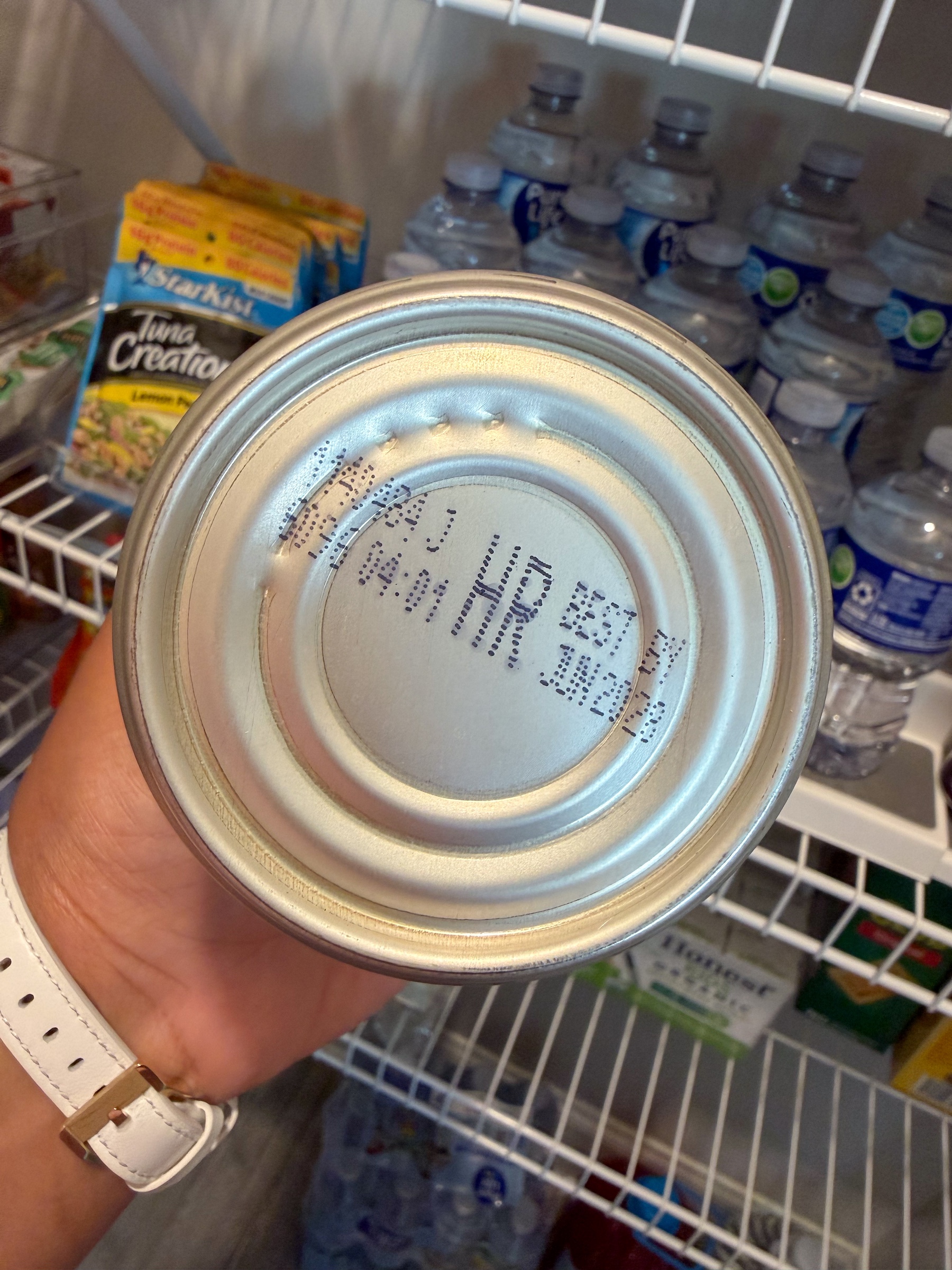
Those are the details I’m trying to be more intentional about now. Organizing these spaces gave me a reason not only to straighten everything, but to slow down, take inventory, and really consider what we have.
A CHECKLIST FOR YOUR HOME
And because I am, after all, a planner, I made a list.
I created the Prepared at Home Emergency Preparedness Checklist to help you take inventory of what you already have and identify anything you may need to add or replace.
Download the Prepared at Home Emergency Preparedness Checklist →
The checklist includes “I Have It” and “Need to Add or Replace” columns, so you can use it now and revisit it periodically as you review and refresh your supplies.
SHOP PREPARED AT HOME
If you’re building or refreshing your own emergency supplies, I’ve gathered some of the practical items we keep on hand—from water filtration and emergency lighting to communication and other preparedness essentials.
This isn’t a list of things I think everyone needs to immediately buy. Start with what you already have, then choose the items that make sense for your home, location, and household.
Shop My Prepared at Home Essentials →
PEACE OF MIND, THEN BACK TO LIVING
There’s a reason I don’t spend much time thinking about our emergency supplies.
I don’t want to.
And, really, that’s part of the beauty of being prepared.
We can make thoughtful decisions now, organize what we might need, check everything periodically, and make sure our family knows the plan.
And then we can put it all away.
Then it’s back to the parts of life we do want to think about every day.
The celebrations. The flowers on the kitchen counter. Dinner around the table. Time with the people we love.
Planning for the unexpected is simply another way of caring for all of it.
Do you keep emergency supplies at home? And when was the last time you checked yours?



Leave a Reply