Hello Friends!
A bridal bouquet may be one of the smaller details in a wedding design, but it has a way of appearing in some of the day’s most meaningful photographs. It walks down the aisle with the bride, becomes part of her portraits and often remains one of the details she remembers most clearly years later.
The most beautiful bouquets are not necessarily the largest or the most elaborate. They are the ones that feel connected to the bride, her gown and the overall feeling of the wedding.
Shape, scale, texture, color and even the way a bouquet is finished can completely change how it feels. Sometimes the flowers are soft and understated. Other times, the bouquet becomes a true statement piece.
From real wedding days to beautifully styled editorial moments, these bouquets each offer a little inspiration for creating a bridal look that feels thoughtful, balanced and personal.
SHAPE SETS THE TONE
One of the first things I consider when looking at a bridal bouquet is its shape.
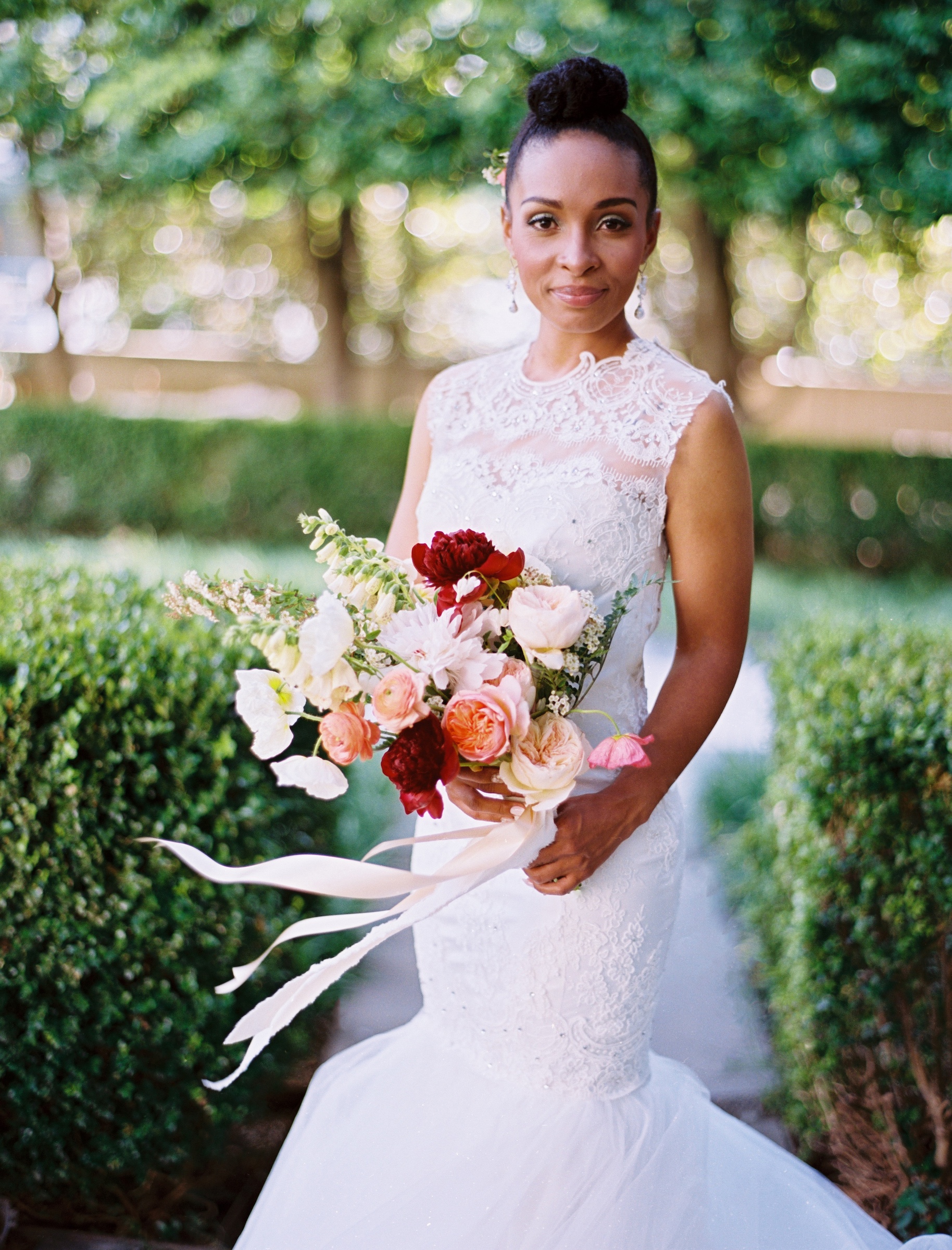
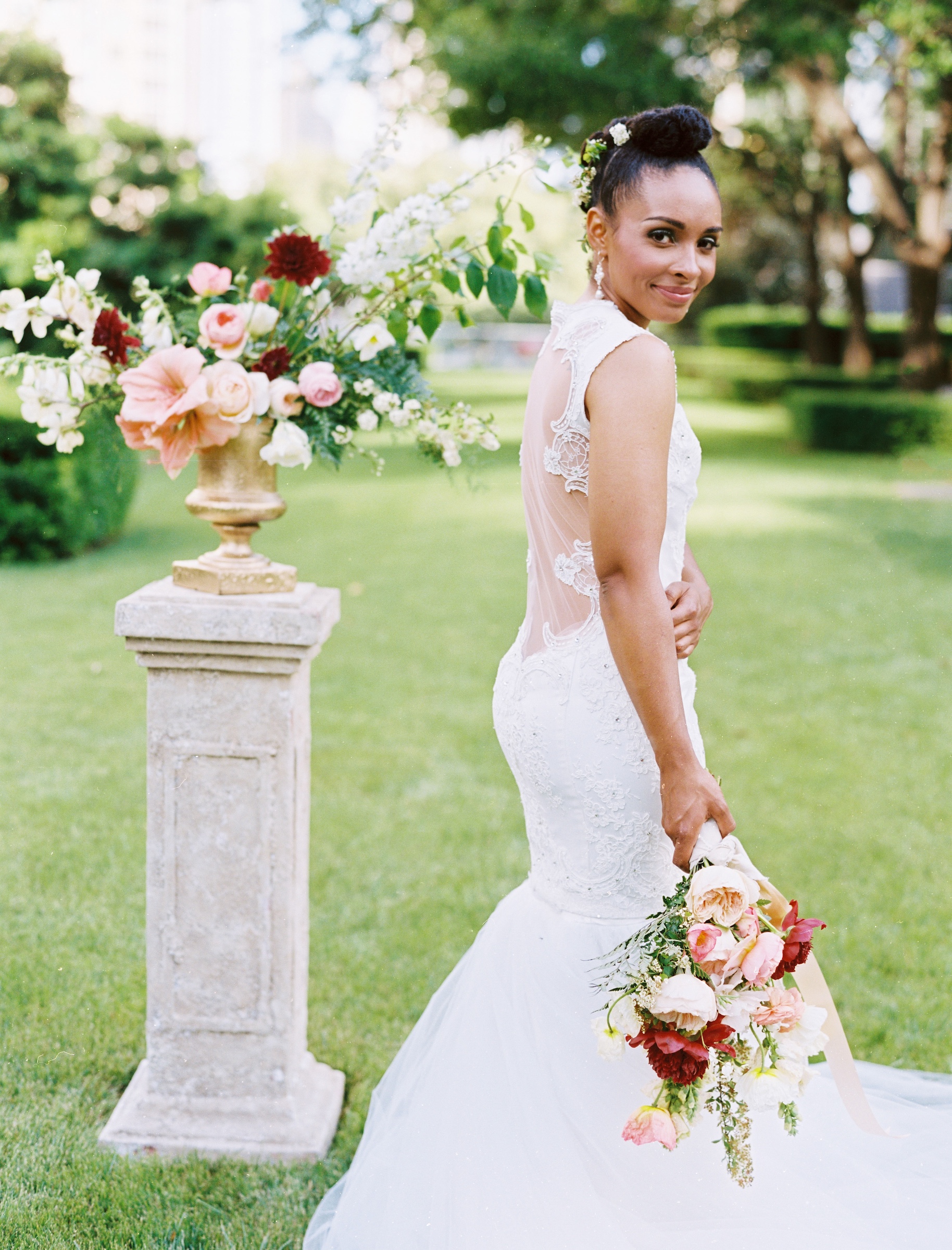
A loose, garden-inspired bouquet naturally feels romantic and organic. Flowers can extend at different heights, greenery can soften the edges and the overall design has a little more movement.
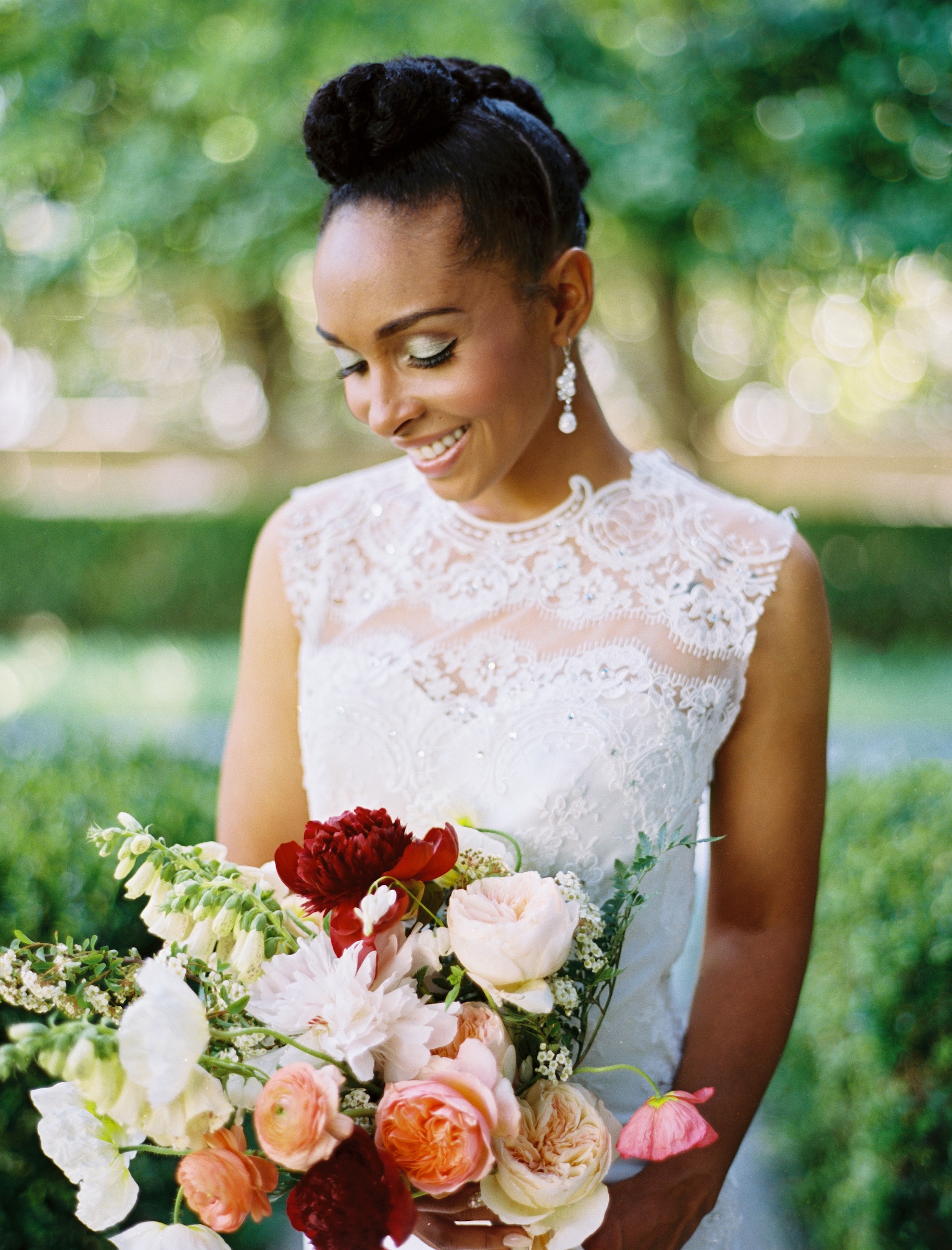
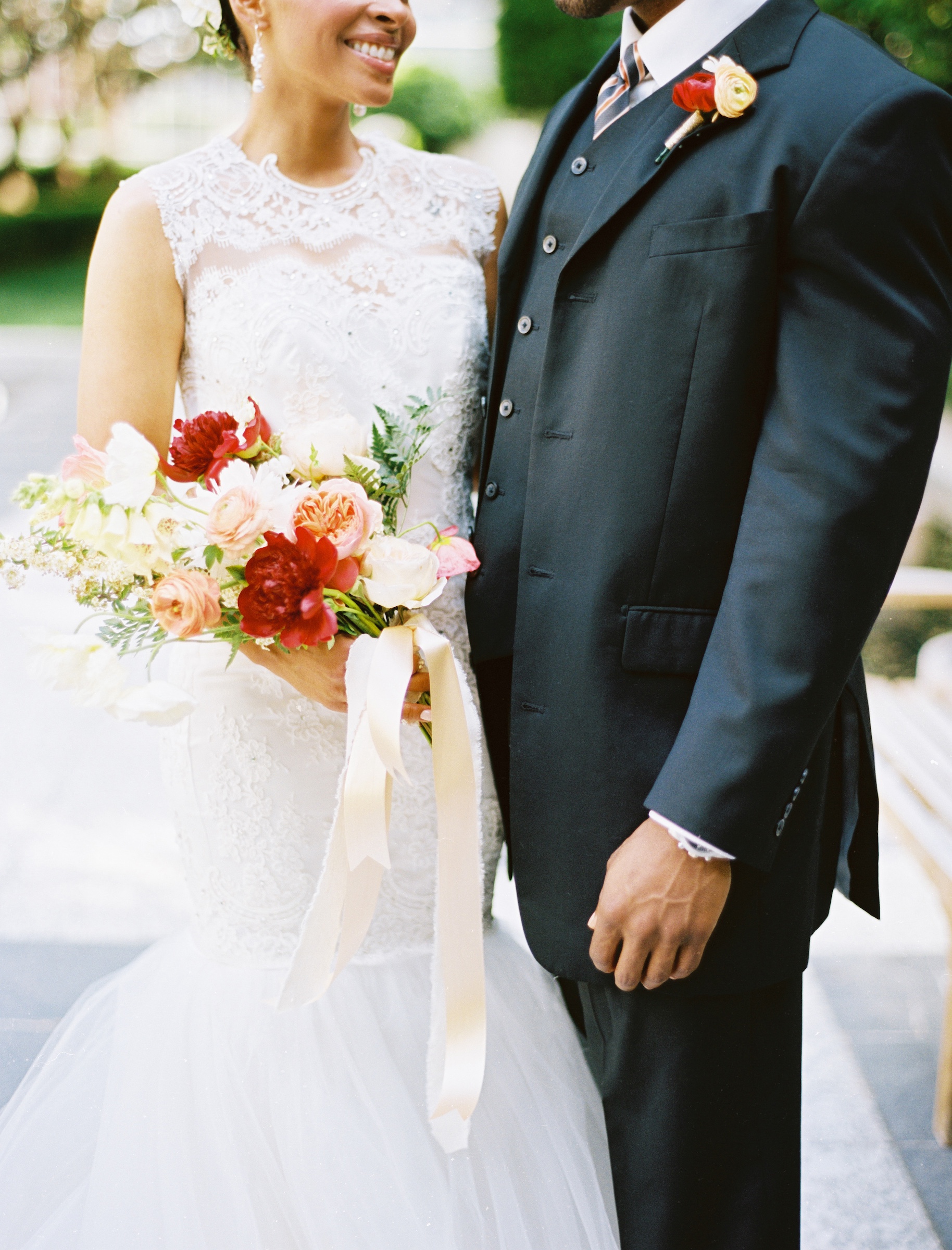
This bouquet is a beautiful example. The arrangement feels abundant without becoming too structured, and the mixture of blush, peach, ivory and deeper red tones gives the flowers wonderful dimension.
The long ivory ribbon adds another layer of softness and allows the bouquet to move naturally with the bride.
SCALE SHOULD COMPLEMENT THE GOWN
A bridal bouquet should feel proportional to the bride and the silhouette of her dress.
That does not mean a dramatic gown always requires a dramatic bouquet—or that a simple gown calls for something small. Instead, the bouquet should feel like it belongs with the overall bridal look.
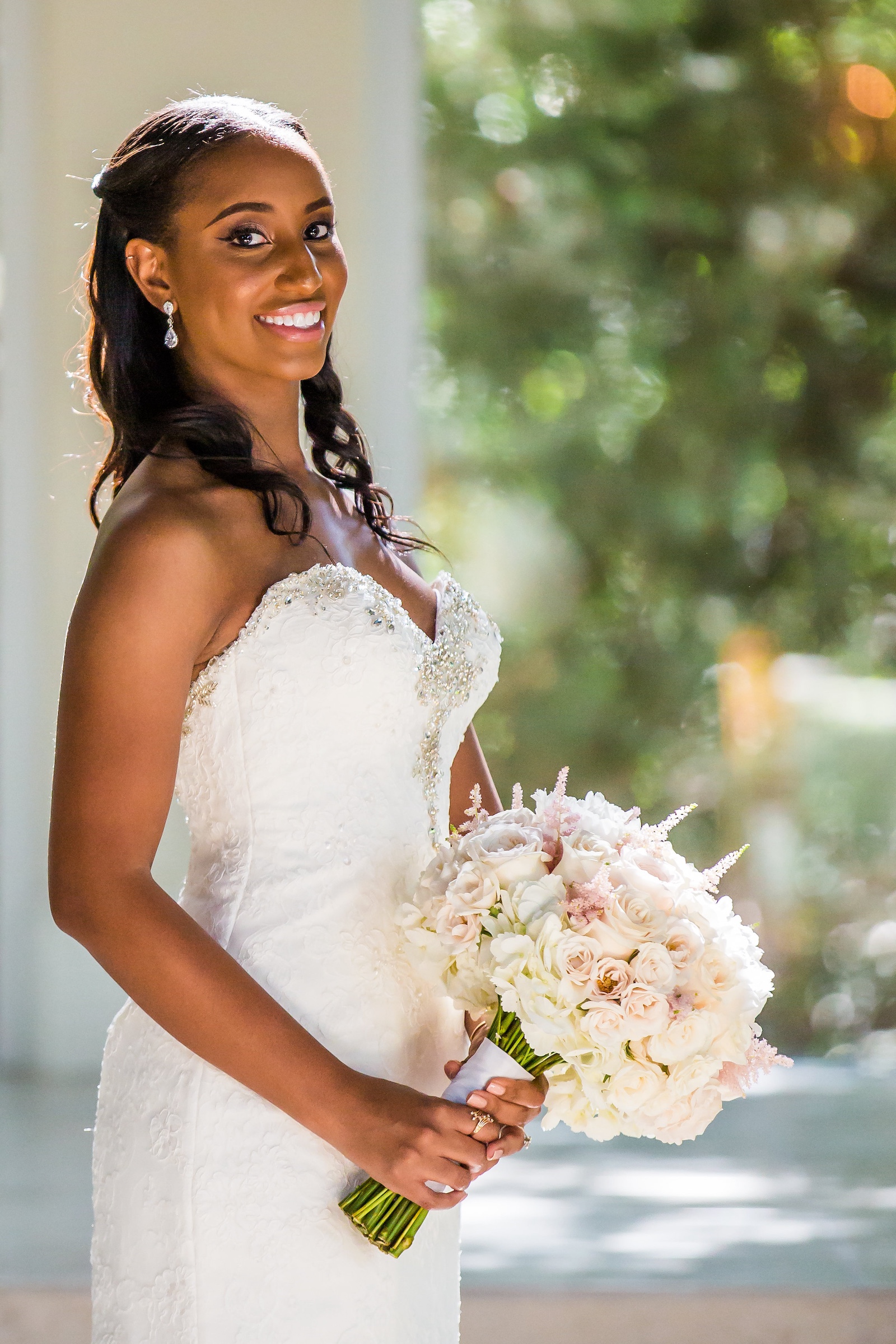
This rounded ivory and blush bouquet has plenty of fullness, but its soft color palette keeps it from competing with the detailing of the gown. The result feels balanced: the flowers are noticeable, but the bride is still the first thing you see.
COLOR CAN BE QUIET OR BOLD
There is no single rule for bridal bouquet color.
A neutral bouquet can feel incredibly elegant, while a saturated palette can become one of the most memorable elements of the bridal look.
What matters most is intention.
A colorful bouquet should still feel connected to the gown, the wedding design and the personality of the bride. The flowers should add something rather than simply compete for attention.
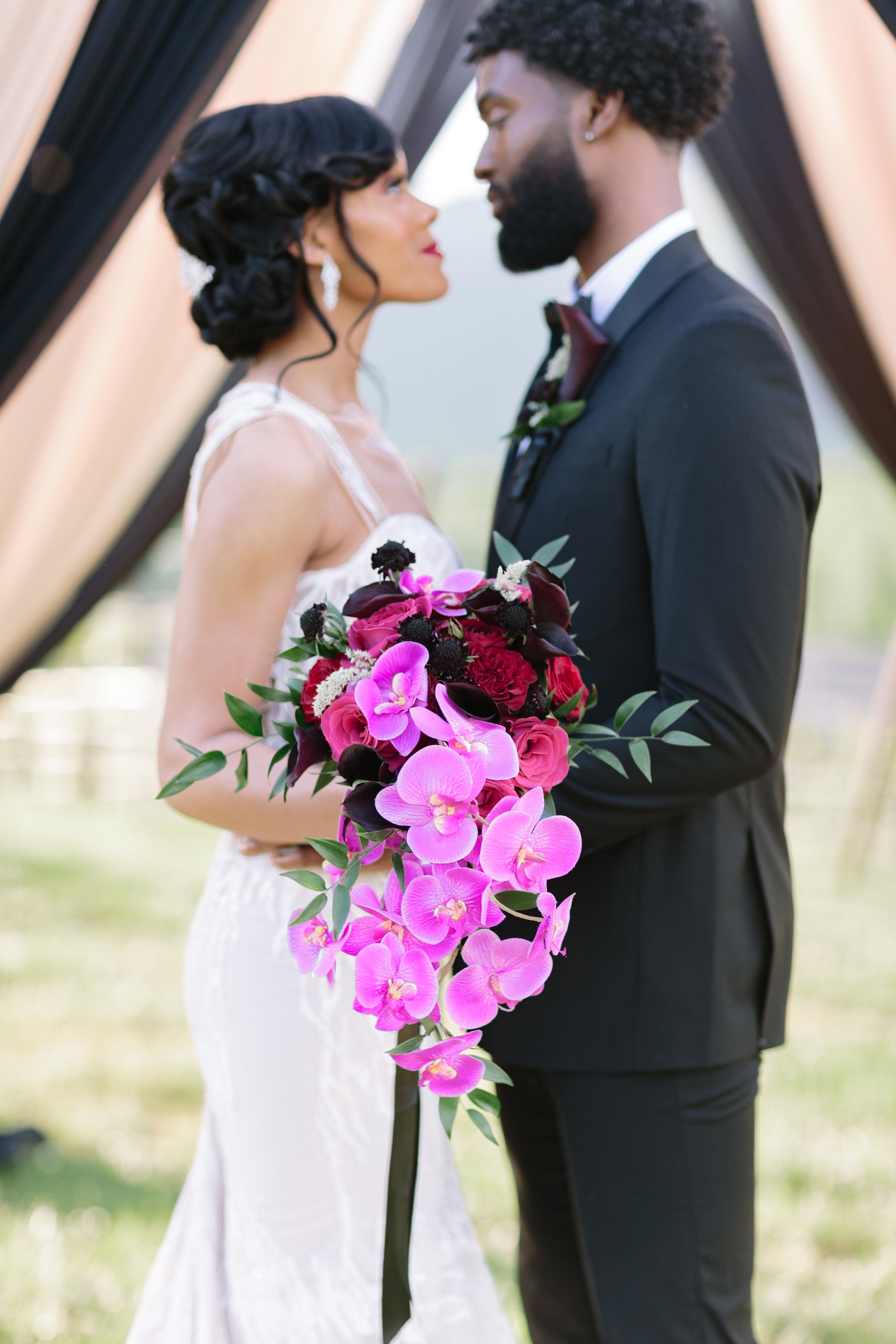
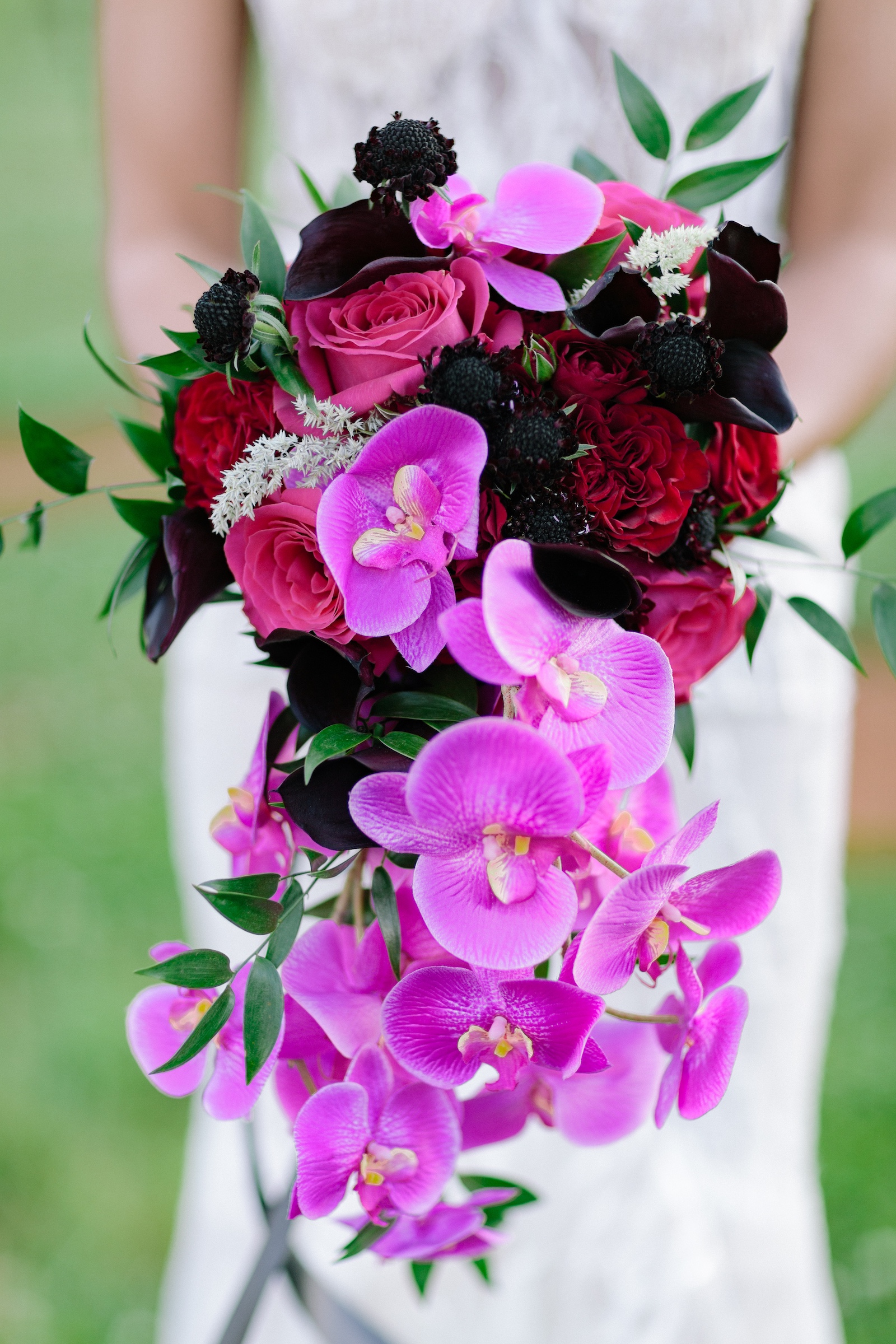
This cascading orchid bouquet does exactly that. The vivid pink orchids, deep burgundy flowers and greenery create beautiful contrast against the light gown. The elongated shape makes the color feel even more dramatic while still allowing the lines of the dress to remain visible.
TEXTURE CREATES INTEREST
One of the easiest ways to make a bouquet feel layered is through texture.
Different flower sizes, petal shapes, greenery and delicate filler flowers allow the eye to move through an arrangement. Even within a softer palette, those differences keep a bouquet from feeling flat.
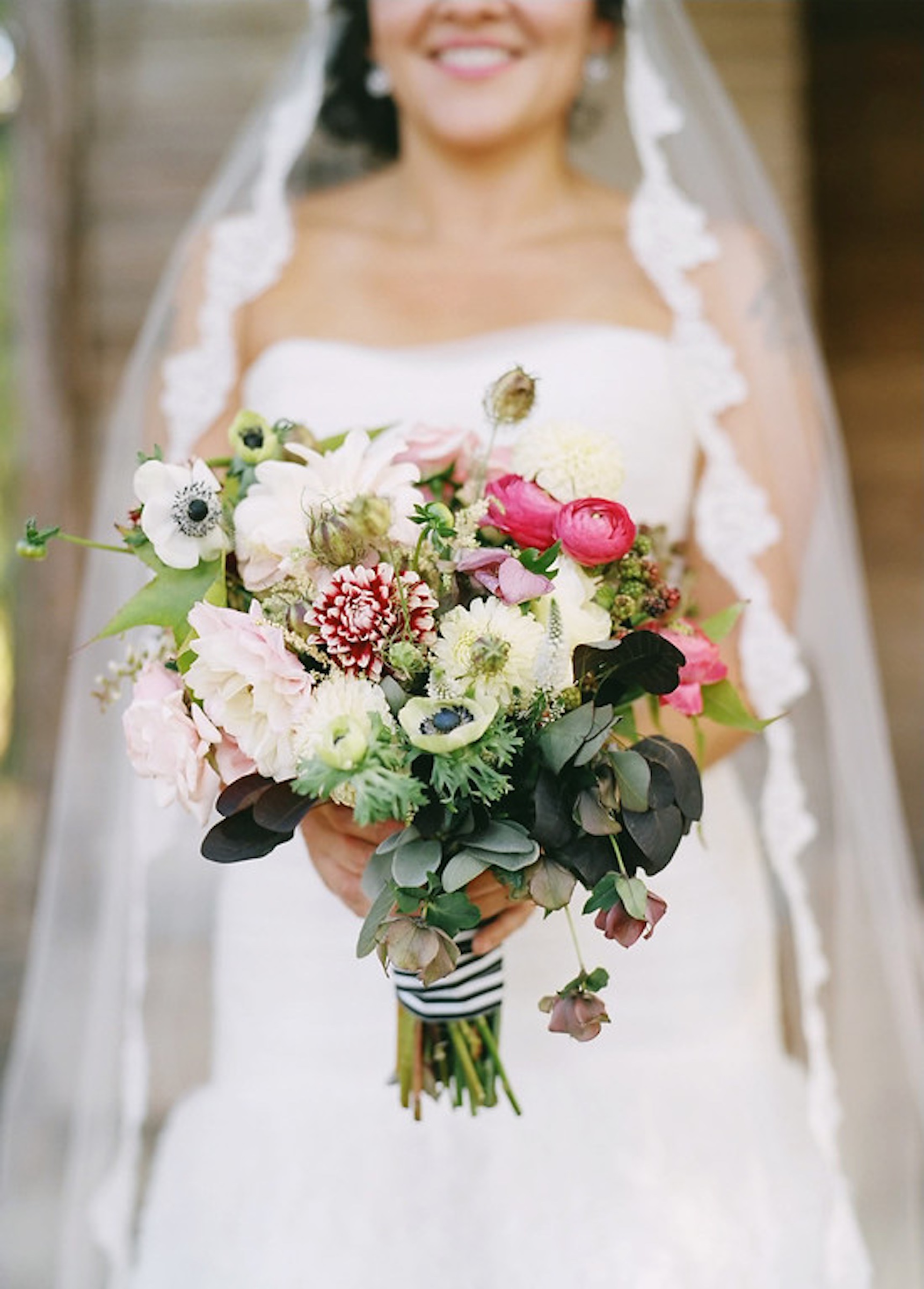
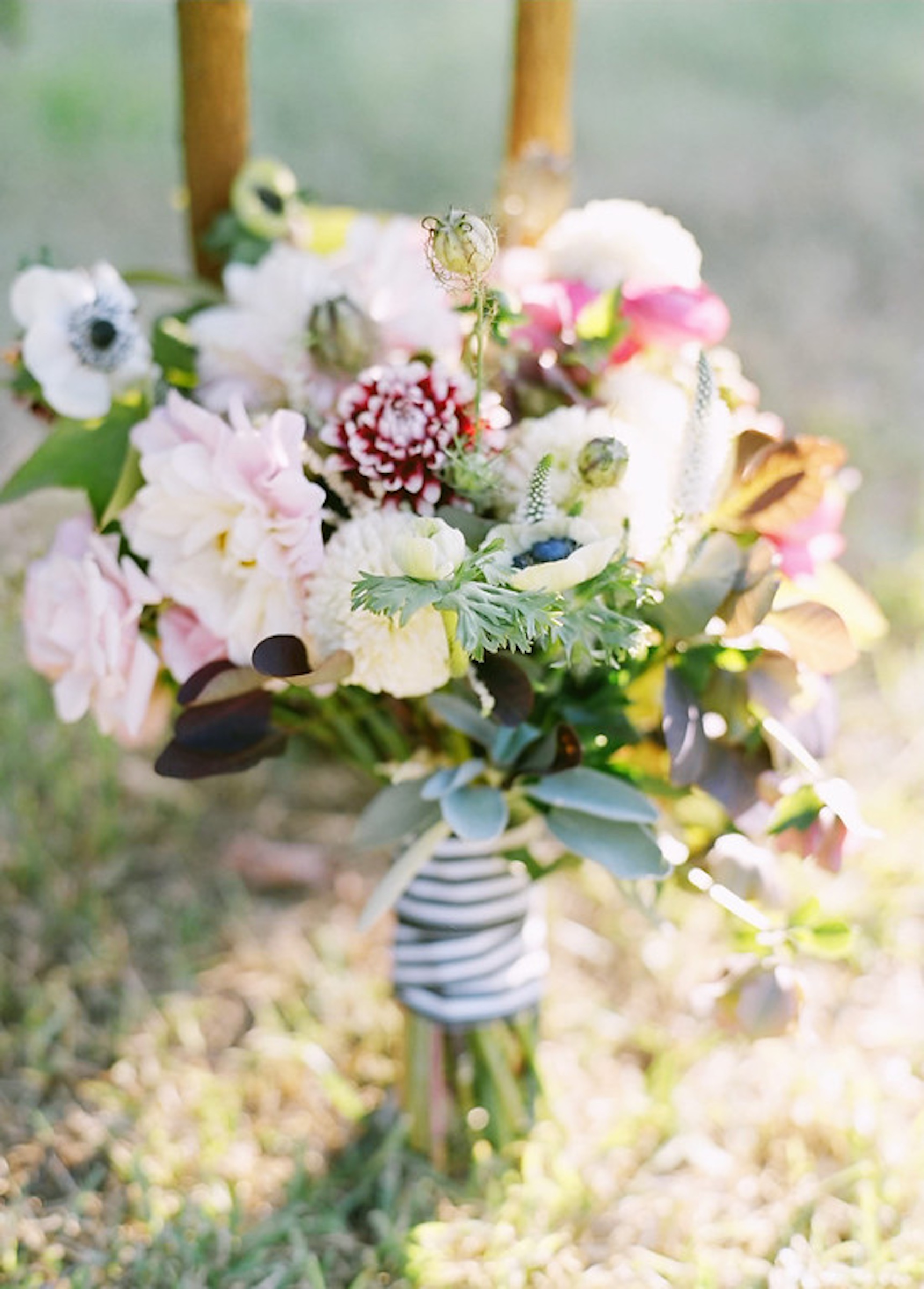
The beauty of texture is that it can be subtle. A bouquet does not need dozens of varieties to feel interesting. Sometimes it is simply the contrast between a soft rose, a more delicate bloom and a bit of greenery that brings the entire arrangement to life.
The garden bouquet below is a perfect example. Its mix of flower forms and greenery feels collected rather than overly composed.
SOMETIMES SIMPLICITY IS THE STATEMENT
Not every memorable bouquet needs to be oversized, cascading or filled with dramatic color.
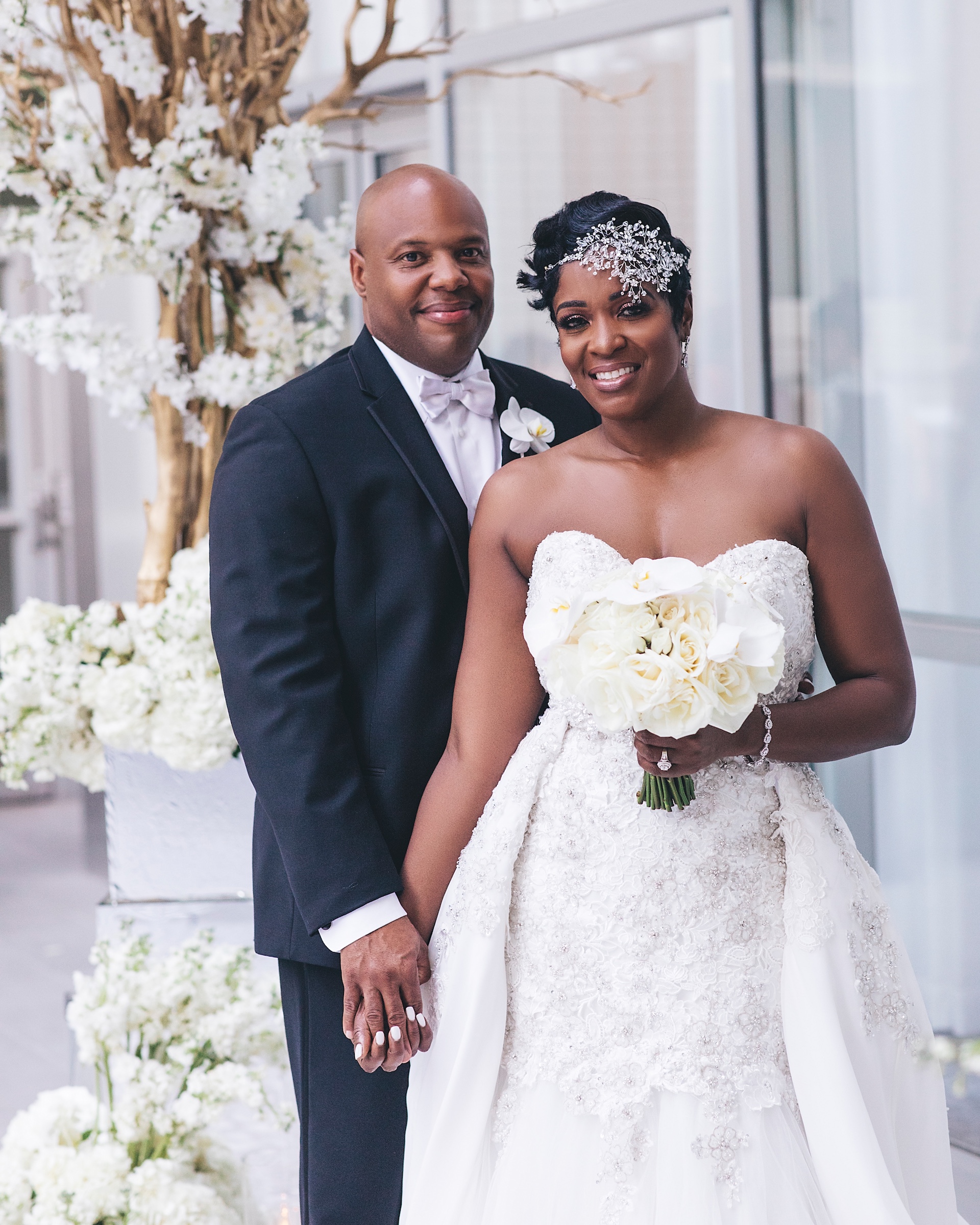
A classic white bouquet can be just as striking, particularly when the bride’s gown already carries a great deal of texture or embellishment.
A restrained bouquet allows those bridal details to breathe.
White roses and orchids are especially timeless because they add shape and softness without visually interrupting the gown. The effect is polished, elegant and quietly beautiful.
PERSONAL DETAILS MAKE A BOUQUET TRULY MEMORABLE
Some of the most meaningful bouquet details have very little to do with the flowers themselves.
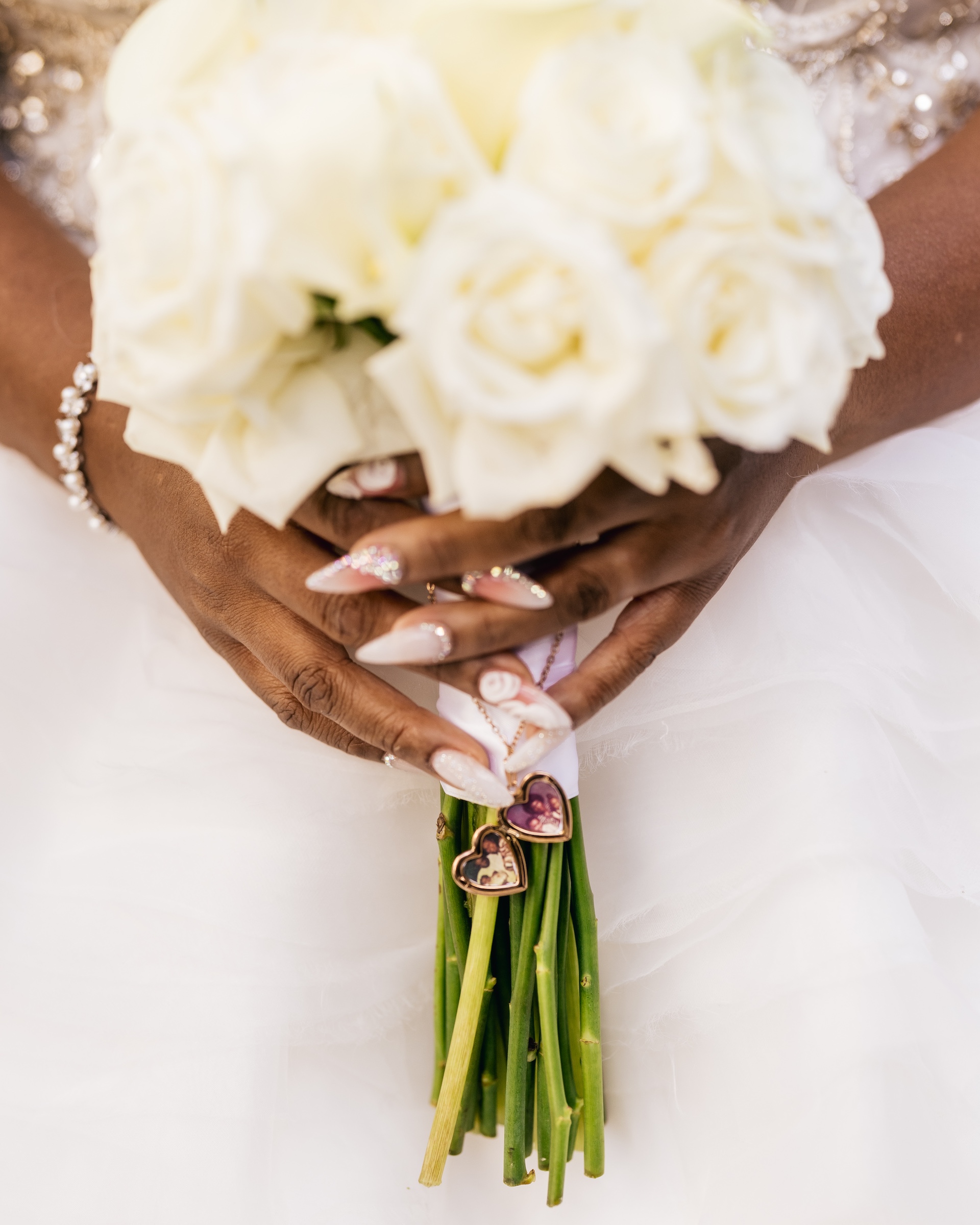
A small photograph, charm, heirloom, ribbon or piece of fabric can turn a beautiful arrangement into something deeply personal.
I especially love details like these because they are often subtle. Guests may never notice them, but the bride knows they are there.
The photo lockets attached to the stems of this bouquet are a beautiful reminder that wedding design can hold memories as well as flowers.
THE BOUQUET SHOULD ALWAYS FEEL LIKE THE BRIDE
Ultimately, the most memorable bridal bouquets are the ones that feel personal.
Some brides are drawn to soft garden flowers and flowing ribbon. Others love the timelessness of white roses and orchids. And some want bold color, movement and a bouquet that makes a statement the moment they enter the room.
There is room for all of it.
The goal is not to choose the bouquet that feels the most impressive on its own. It is to choose the one that becomes a beautiful extension of the bride and the wedding around her.
That is when the flowers feel effortless—and when they become part of the memory of the day.
What kind of bridal bouquet do you love most: soft and romantic, classic and timeless or bold and dramatic?
Leave a Reply